Prevention of gaming addiction: facts and systemic decisions to protect schoolchildren
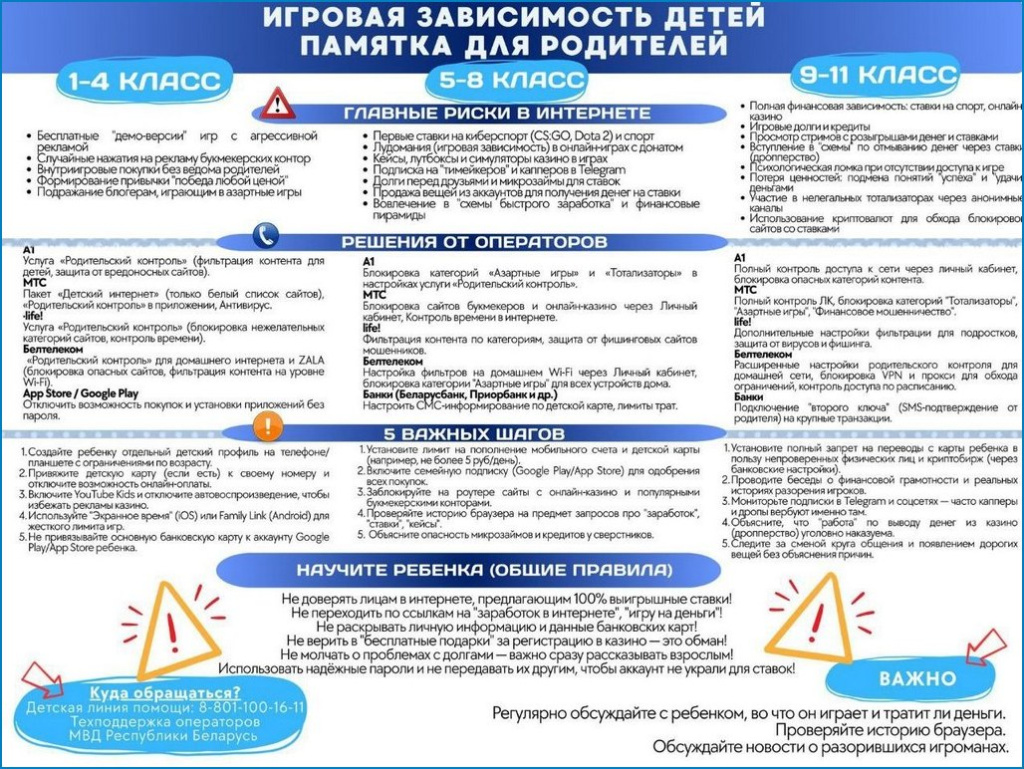
Amid the rapid digitalization of educational and home environments, fostering healthy relationships with digital technologies among schoolchildren has become a matter of particular urgency. Recently, experts in pedagogy and psychology—representing the Academy of National Education, the Institute of Psychology at Maxim Tank Belarusian State Pedagogical University, and the editorial staff of *Nastawnitskaya Gazeta*—identified key risk factors and evidence-based solutions regarding student gaming addiction during a series of discussions.
Children's vulnerability to gaming addiction stems not so much from the mere presence of devices as from a huge lack of self-regulation skills, emotional control, and critical thinking abilities. A device is merely a tool that fills a psychological void.
Addiction develops most rapidly under conditions of round-the-clock, unrestricted access to online games, which blurs the boundaries between study time, leisure, and virtual reality.
Experience shows that purely prohibitive measures are largely ineffective and often prove counterproductive. The best results are achieved through the systematic development of digital literacy and emotional resilience. This is a multifaceted challenge requiring the coordinated efforts of a strong trio: family, school, and state.
A healthy digital future for our children is the result of a conscious partnership between family, school, and society. Only through joint efforts can we create a safe and enriching environment for the rising generation.